![Women Leadership Development [WLEDE]](https://wlede.org/wp-content/themes/kipya/images/logo-WLEDE.png
)
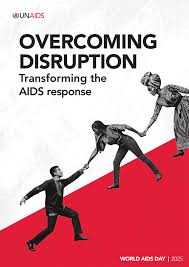
This week, as we observe AIDS Week, let us remember when our journey with HIV/AIDS began in Uganda. The first known case was recorded in 1982 in Rakai District. At the time the disease was often referred to locally as “silimu.” What started then as a mysterious and devastating illness grew to affect entire communities — but it also sparked a national response rooted in hope, solidarity, and resilience. Uganda AIDS Commission+1
Today, the reality is different — but HIV remains part of our story. Here are some of the most recent facts for Uganda (as of end-2024):
- There are approximately 1,527,240 people living with HIV in Uganda. allAfrica.com+1
- The disease affects adults, children, men and women — but women remain disproportionately represented among adult cases. allAfrica.com+1
- In recent years, the country has made progress: AIDS-related deaths have fallen sharply — from around 56,000 per year in 2010 to about 20,000 in 2024. Parliament Uganda+1
- New HIV infections have also dropped — from roughly 96,000 per year in 2010 to around 37,000 in 2024. HealthCare Middle East & Africa+1
These numbers show not just statistics — they tell a story of survival, progress, and the work that remains. Many lives have been saved, many people now live with HIV under treatment, but new infections still occur. The fight continues.
During this AIDS Week, let’s honour those we’ve lost, stand with those living with HIV, and commit to:
✅ Fighting stigma.
✅ Supporting testing, prevention and access to treatment.
✅ Creating awareness among youth and vulnerable groups.
✅ Ensuring no one is left behind — especially women, children, and the youth.
Every action counts. Every voice matters. Together — as Ugandans, as communities — we can move closer to a future where HIV is no longer a threat. 💪🏿